The Difference Between Cleaning, Sanitizing, and Disinfecting
When it comes to maintaining a healthy home, many people use the terms cleaning, sanitizing, and disinfecting interchangeably. However, these three processes are actually different, and each plays an important role in keeping your home safe and hygienic.
At Gleam Bee Cleaning Service, we believe that understanding these differences helps homeowners make better decisions about their cleaning routines and the level of protection their homes need.
Let’s break down what each one really means.
Cleaning: Removing Dirt and Debris
Cleaning is the first and most basic step in maintaining a healthy home. It involves removing visible dirt, dust, grease, and debris from surfaces using cleaning agents like soap or detergent and water.
While cleaning can remove some germs, its main purpose is to physically lift and remove contaminants from surfaces, rather than killing microorganisms.
Common cleaning tasks include:
Wiping countertops and tables
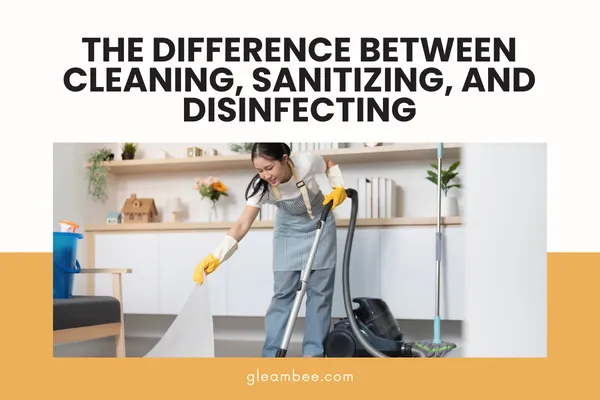
Vacuuming carpets and rugs
Sweeping and mopping floors
Cleaning bathrooms and kitchens
Dusting furniture and shelves
A home that looks clean is a great start, but for deeper protection, additional steps are sometimes needed.
Sanitizing: Reducing Germs to Safe Levels
Sanitizing goes one step further than cleaning. Instead of simply removing dirt, sanitizing reduces the number of germs on surfaces to levels considered safe by public health standards.
Sanitizers are commonly used in places where hygiene is especially important, such as kitchens and food preparation areas.
Examples of sanitizing include:
Sanitizing kitchen countertops and cutting boards
Sanitizing children’s toys
Sanitizing food preparation surfaces
Using hand sanitizer when soap and water are unavailable
Sanitizing typically kills most bacteria and germs, but not all microorganisms.
Disinfecting: Killing Harmful Germs and Viruses
Disinfecting is the strongest level of germ control among the three. Disinfectants use stronger chemical solutions designed to kill bacteria, viruses, and fungi on surfaces.
Unlike basic cleaning, disinfecting targets harmful microorganisms that may cause illness. However, disinfectants work best after surfaces have been cleaned first, because dirt and debris can reduce their effectiveness.
Common areas that should be disinfected regularly include:
Doorknobs
Light switches
Faucets and sink handles
Bathroom surfaces
Frequently touched electronics
Disinfecting is especially important during flu season or when someone in the household is sick.
Why Professional Cleaning Uses All Three
Professional cleaning services often combine cleaning, sanitizing, and disinfecting to create a truly healthy environment.
Think of it as a three-step system:
Clean – Remove dirt and debris
Sanitize – Reduce bacteria to safe levels
Disinfect – Kill harmful germs and viruses
Using all three methods together provides a deeper and more effective clean.
How Gleam Bee Cleaning Service Protects Your Home
At Gleam Bee Cleaning Service, we don’t just focus on making homes look spotless—we focus on creating healthier living spaces for our clients.
Our professional cleaning approach includes:
Thorough removal of dust, dirt, and buildup
Sanitizing surfaces that come in contact with food or hands
Disinfecting high-touch areas where germs commonly spread
By combining these techniques, we help ensure your home is not only clean but also safe and hygienic for your family.
A clean home isn’t just about appearance—it’s about health and safety.
Understanding the difference between cleaning, sanitizing, and disinfecting helps you maintain a home that not only looks great but also protects your family from harmful germs.
If you want a deeper, more professional clean, Gleam Bee Cleaning Service is here to help.
✨ Let our team handle the cleaning so you can enjoy a healthier, fresher home.


